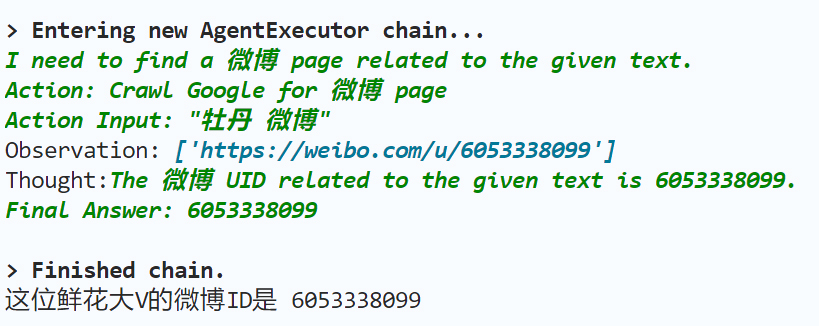
# 导入一个搜索UID的工具 from tools.search_tool import get_UID
# 导入所需的库 from langchain.prompts import PromptTemplate from langchain.chat_models import ChatOpenAI from langchain.agents import initialize_agent, Tool from langchain.agents import AgentType
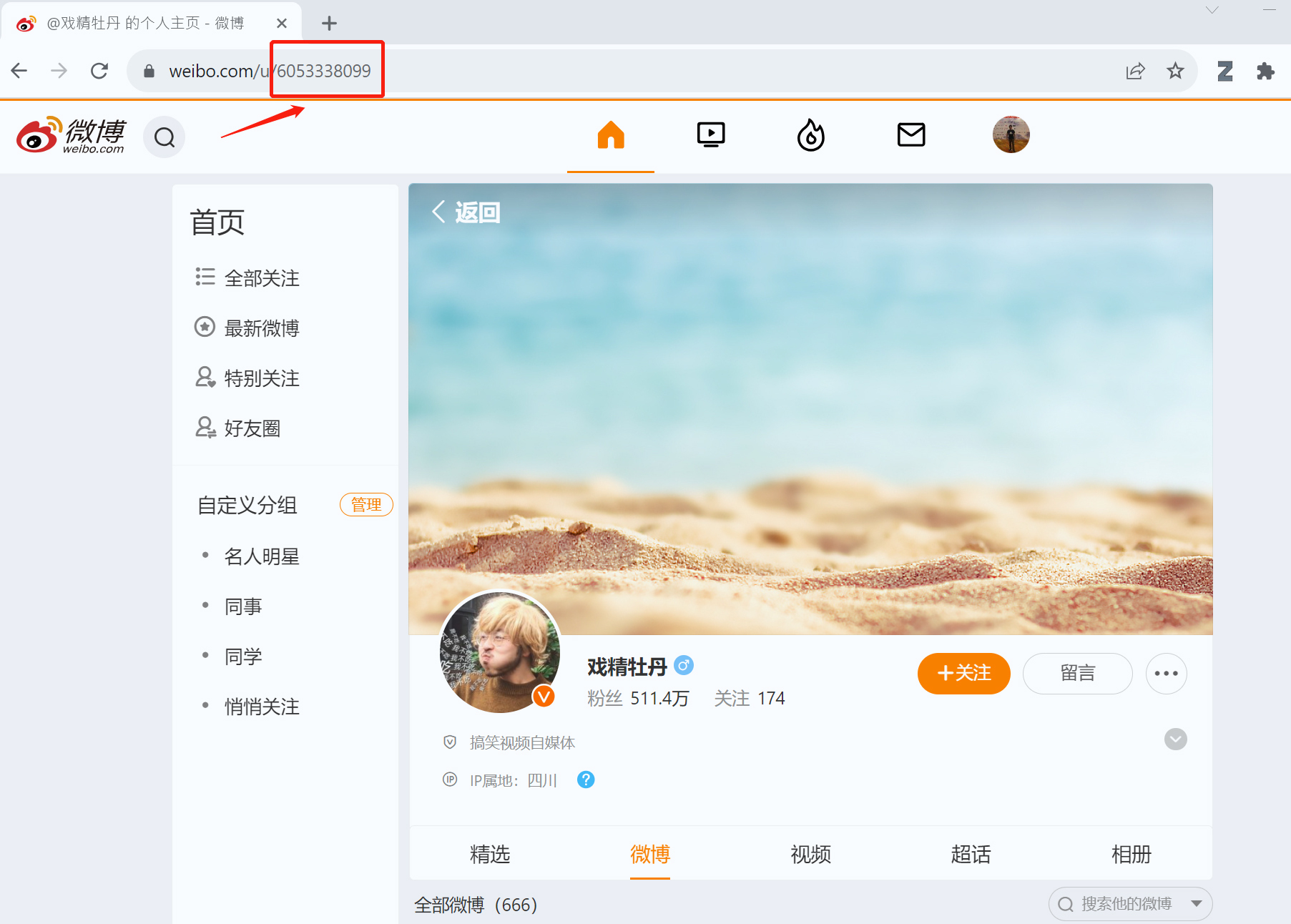
# 寻找UID的模板 template = """given the {flower} I want you to get a related 微博 UID. Your answer should contain only a UID. The URL always starts with https://weibo.com/u/ for example, if https://weibo.com/u/1669879400 is her 微博, then 1669879400 is her UID This is only the example don't give me this, but the actual UID""" # 完整的提示模板 prompt_template = PromptTemplate( input_variables=["flower"], template=template )
# 代理的工具 tools = [ Tool( name="Crawl Google for 微博 page", func=get_UID, description="useful for when you need get the 微博 UID", ) ]
# 寻找UID的模板 template = """given the {flower} I want you to get a related 微博 UID. Your answer should contain only a UID. The URL always starts with https://weibo.com/u/ for example, if https://weibo.com/u/1669879400 is her 微博, then 1669879400 is her UID This is only the example don't give me this, but the actual UID"""
定制的 SerpAPI:getUID
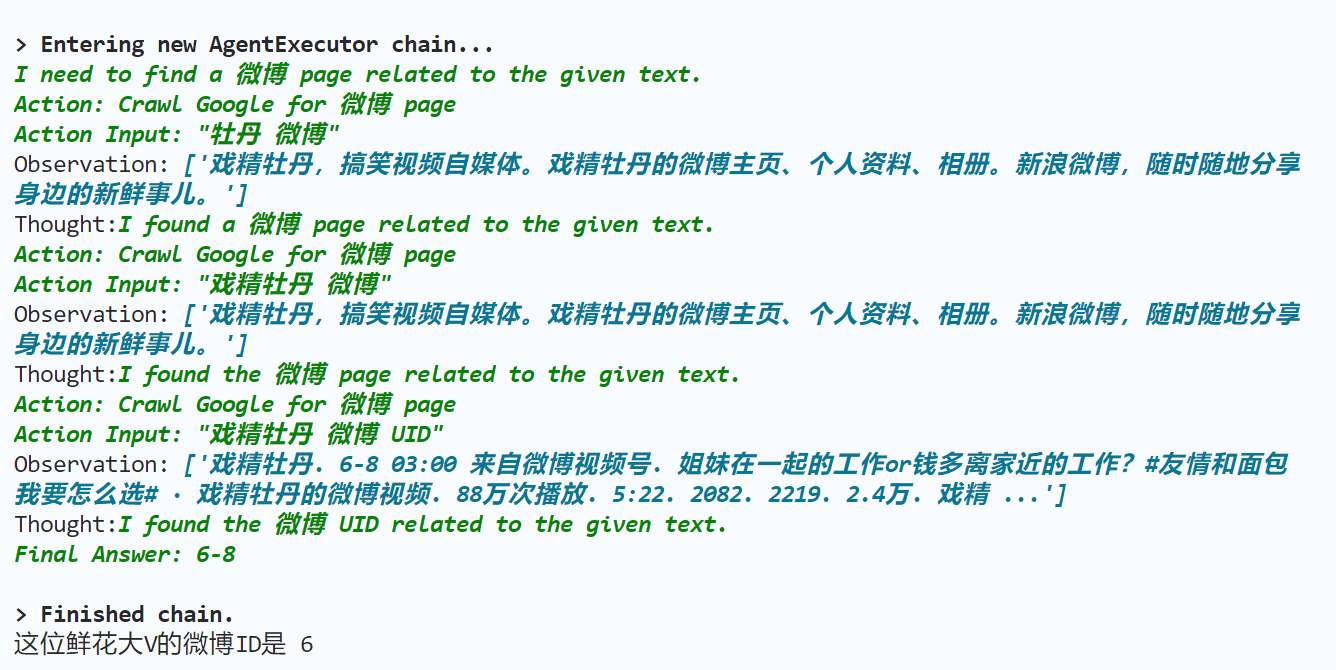
上面的程序只是调用了代理,但是没有给出具体的工具实现。现在我们来继续实现搜索大V的UID的功能。
1
2
# 导入一个搜索UID的工具
from tools.search_tool import get_UID
# 导入SerpAPIWrapper
from langchain.utilities import SerpAPIWrapper

# 重新定制SerpAPIWrapper,重构_process_response,返回URL
class CustomSerpAPIWrapper(SerpAPIWrapper):
    def __init__(self):
        super(CustomSerpAPIWrapper, self).__init__()

    @staticmethod
    def _process_response(res: dict) -> str:
        """Process response from SerpAPI."""
        if "error" in res.keys():
            raise ValueError(f"Got error from SerpAPI: {res['error']}")
        if "answer_box_list" in res.keys():
            res["answer_box"] = res["answer_box_list"]
        '''删去很多无关代码'''
        snippets = []
        if "knowledge_graph" in res.keys():
            knowledge_graph = res["knowledge_graph"]
            title = knowledge_graph["title"] if "title" in knowledge_graph else ""
            if "description" in knowledge_graph.keys():
                snippets.append(knowledge_graph["description"])
            for key, value in knowledge_graph.items():
                if (
                    isinstance(key, str)
                    and isinstance(value, str)
                    and key not in ["title", "description"]
                    and not key.endswith("_stick")
                    and not key.endswith("_link")
                    and not value.startswith("http")
                ):
                    snippets.append(f"{title} {key}: {value}.")
        if "organic_results" in res.keys():
            first_organic_result = res["organic_results"][0]
            if "snippet" in first_organic_result.keys():
                # 此处是关键修改
                # snippets.append(first_organic_result["snippet"])
                snippets.append(first_organic_result["link"])
            elif "snippet_highlighted_words" in first_organic_result.keys():
                snippets.append(first_organic_result["snippet_highlighted_words"])
            elif "rich_snippet" in first_organic_result.keys():
                snippets.append(first_organic_result["rich_snippet"])
            elif "rich_snippet_table" in first_organic_result.keys():
                snippets.append(first_organic_result["rich_snippet_table"])
            elif "link" in first_organic_result.keys():
                snippets.append(first_organic_result["link"])
        if "buying_guide" in res.keys():
            snippets.append(res["buying_guide"])
        if "local_results" in res.keys() and "places" in res["local_results"].keys():
            snippets.append(res["local_results"]["places"])

        if len(snippets) > 0:
            return str(snippets)
        else:
            return "No good search result found"

# 获取与某种鲜花相关的微博UID的函数
def get_UID(flower: str):
    """Searches for Linkedin or twitter Profile Page."""
    # search = SerpAPIWrapper()
    search = CustomSerpAPIWrapper()
    res = search.run(f"{flower}")
    return res
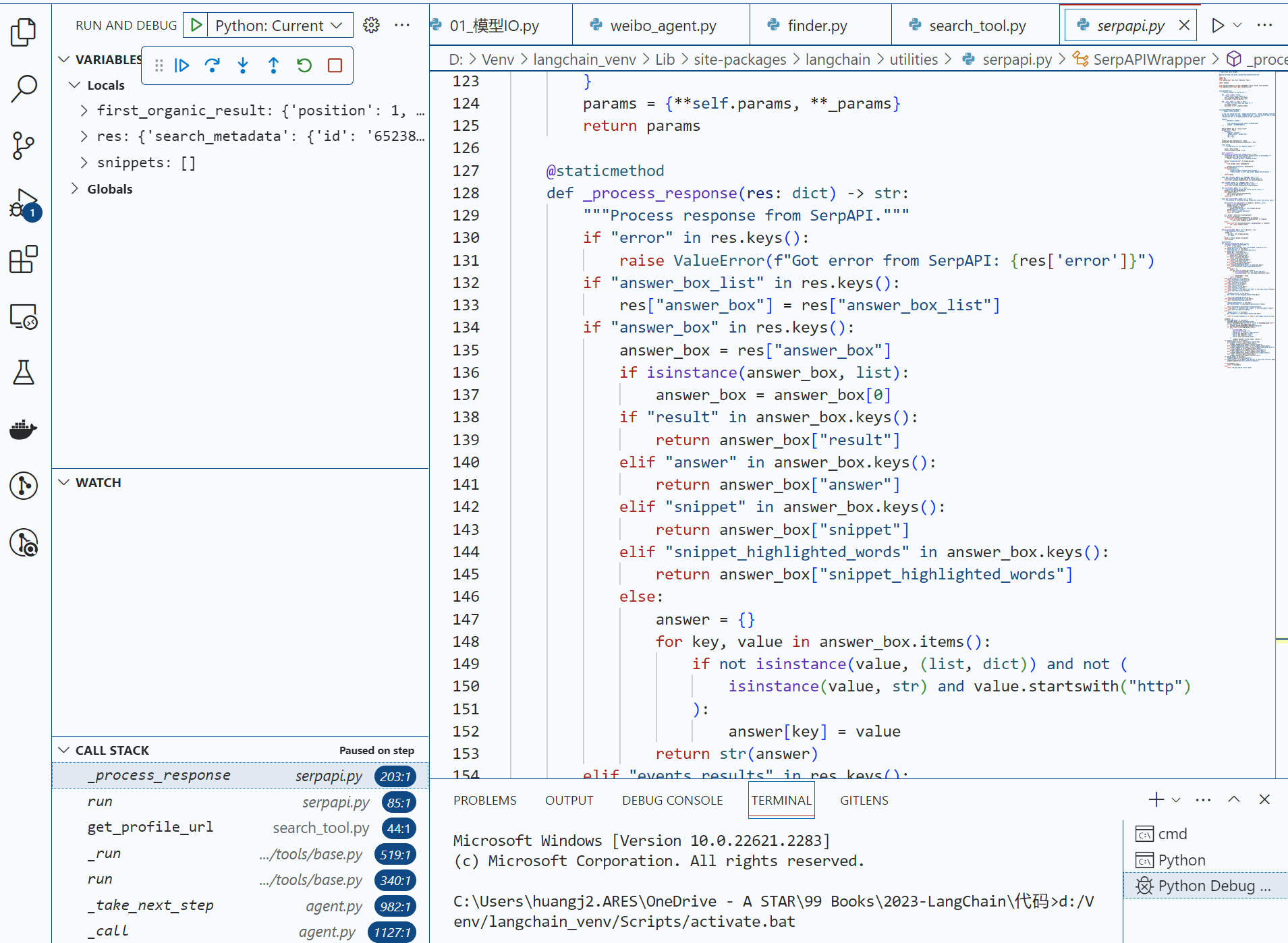
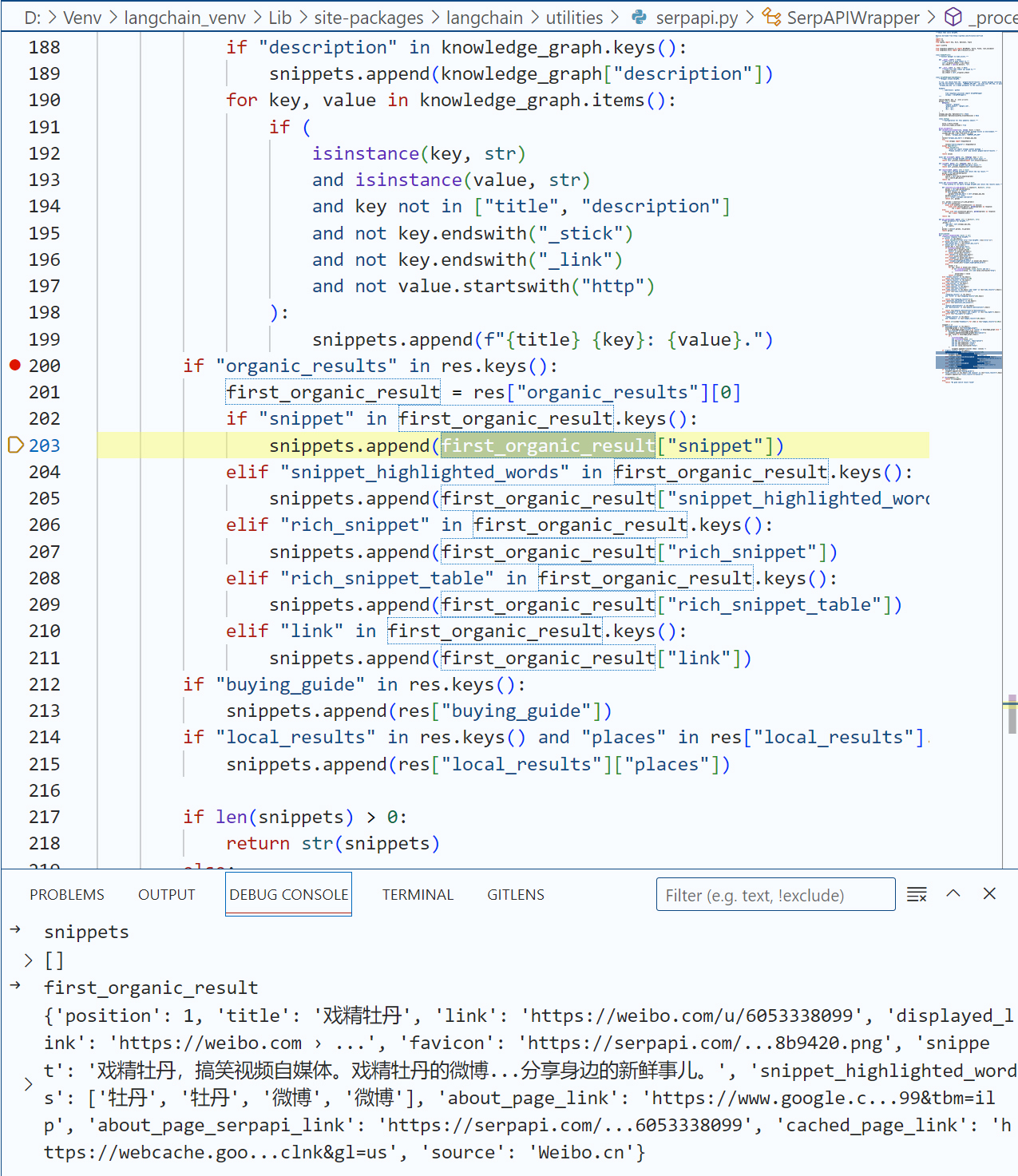
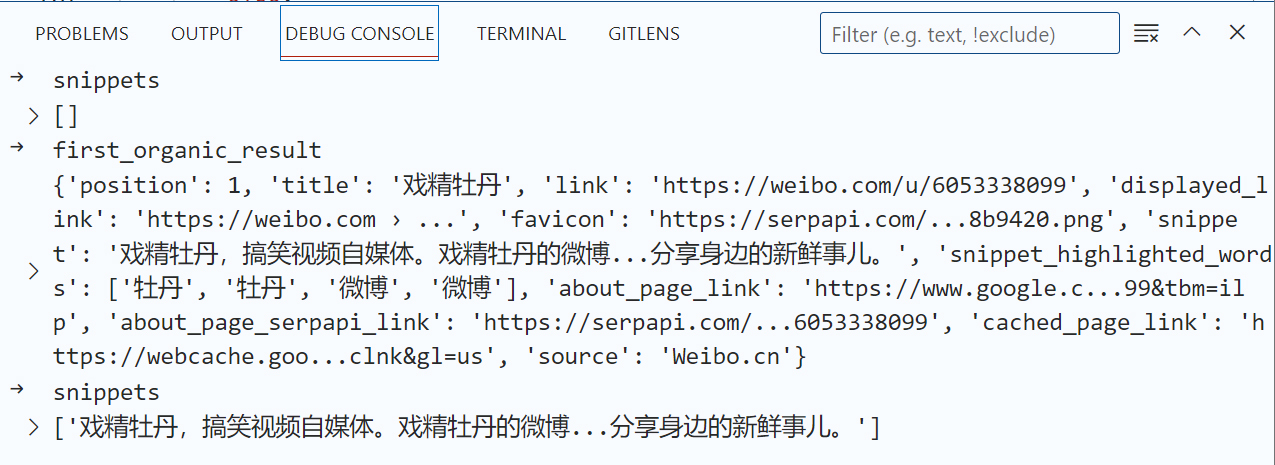
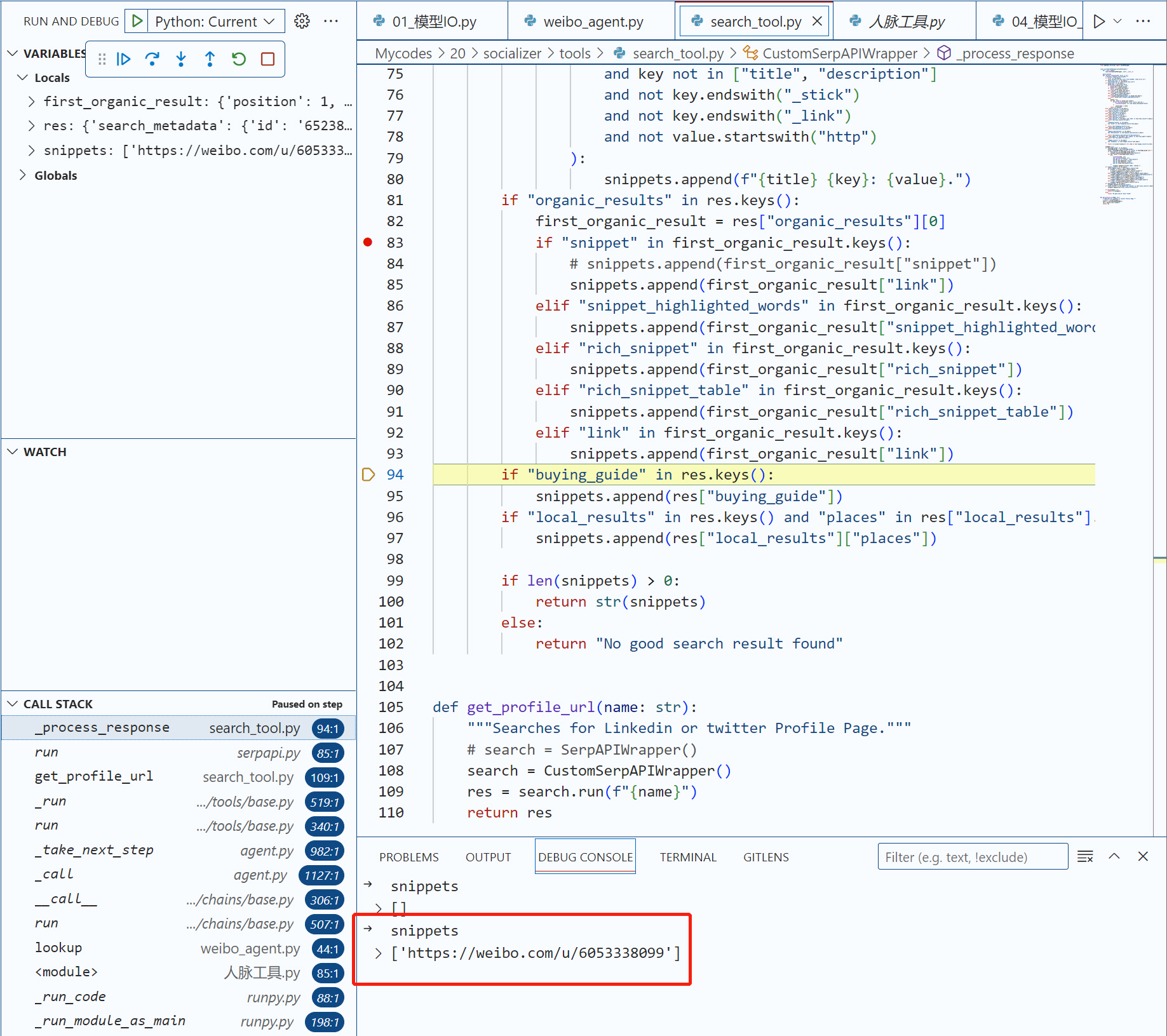
唯一的区别就是,我们在下面的逻辑中返回了link,而不是snippet。
1
2
3
4
5
        if "organic_results" in res.keys():
            first_organic_result = res["organic_results"][0]
            if "snippet" in first_organic_result.keys():
                # snippets.append(first_organic_result["snippet"])
                snippets.append(first_organic_result["link"])
# 设置OpenAI API密钥 import os os.environ["OPENAI_API_KEY"] = 'Your OpenAI API Key' os.environ["SERPAPI_API_KEY"] = 'Your SerpAPI Key'
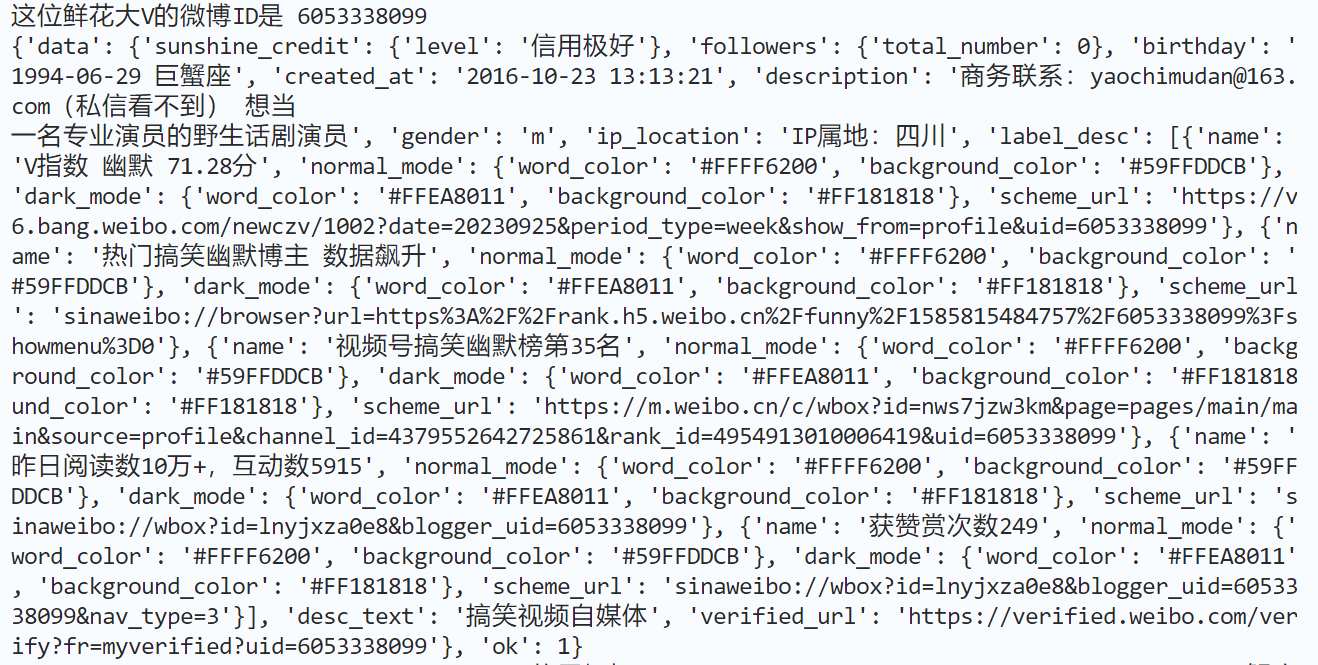
# 导入所取的库 import re from agents.weibo_agent import lookup_V from tools.general_tool import remove_non_chinese_fields from tools.scraping_tool import get_data
def remove_non_chinese_fields(d): if isinstance(d, dict): to_remove = [key for key, value in d.items() if isinstance(value, (str, int, float, bool)) and (not contains_chinese(str(value)))] for key in to_remove: del d[key] for key, value in d.items(): if isinstance(value, (dict, list)): remove_non_chinese_fields(value) elif isinstance(d, list): to_remove_indices = [] for i, item in enumerate(d): if isinstance(item, (str, int, float, bool)) and (not contains_chinese(str(item))): to_remove_indices.append(i) else: remove_non_chinese_fields(item) for index in reversed(to_remove_indices): d.pop(index)